
Biology Revision: WJEC GCSE The Sciences (Double Award) · teaching from 2026 · first awarded 2028
This guide is for the replacement qualification, taught from 2026 and first awarded in 2028. The page shows Biology requirements plus shared skills and Unit 7; choose another science above to switch scope.
Qualification code: 3455QD
Course details
Assessment Six 75-minute written exams: Units 1–3 have 56 marks and contribute 14.3% each; Units 4–6 have 64 marks and contribute 15.7% each. Unit 7 comprises two of three external enquiries, contributing 10%. Units 1–3 are first available in summer 2027; the full qualification is first awarded in summer 2028.
Tick a point after revising it. Progress is saved on this device and does not measure mastery.
Reviewed course guidance
Revision points, with the explanation beside them
Open a point to read what to know, how to use it in an assessment, a plain-language explanation and a self-check. Answers stay hidden until you choose to reveal them.
Options and source
Unit 1 tier
- Foundation
- Higher
Unit 2 tier
- Foundation
- Higher
Unit 3 tier
- Foundation
- Higher
Unit 4 tier
- Foundation
- Higher
Unit 5 tier
- Foundation
- Higher
Unit 6 tier
- Foundation
- Higher
Progress could not be saved in this browser. Your ticks will remain for this page view only.
Topic group
Unit 1 · 1.1 · Cells and transport
- Core
Scope: Core · Topic 1.1 (core)
Open revision guidance
What to know
- All living things are composed of cells; organisms can be unicellular or multicellular.
- A typical animal cell has a cell membrane, cytoplasm, a nucleus and mitochondria, but no cellulose wall or chloroplasts. Typical plant cells also have a cellulose wall and a large cell-sap vacuole; photosynthetic plant cells have chloroplasts. Specialised cells can differ from these general models.
- The cell membrane controls entry and exit; cytoplasm is the site of many reactions; the nucleus contains DNA and controls cell activities. Mitochondria carry out stages of aerobic respiration. In a typical photosynthetic plant cell, the cellulose wall supports the cell, chloroplasts carry out photosynthesis and the large vacuole contains cell sap and supports turgor. Not every plant cell has chloroplasts: root hair cells normally do not.
- Levels of organization: Cells form tissues, tissues form organs, organs form organ systems.
- Diffusion is net movement of particles down a concentration gradient. Oxygen, carbon dioxide and glucose may move across suitable membranes by diffusion. Osmosis is net movement of water through a partially permeable membrane from higher to lower water potential, commonly described as from a more dilute to a more concentrated solution.
- Multicellular organisms have specialised cells with adaptations for their jobs. A root hair cell's long projection increases the surface area for absorption. A human red blood cell's biconcave shape provides a large surface area and short diffusion distance, while its haemoglobin binds oxygen for transport.
- A tissue is a group of cells working together; an organ contains different tissues performing a function; an organ system contains organs working together. For example, cardiac muscle cells form muscle tissue in the heart, which is an organ in the circulatory system.
What to do in an assessment
- Prepare a slide: Place a thin specimen on a slide, add a drop of water/stain, and lower a coverslip at an angle to avoid air bubbles.
- For the plant slide, use a thin piece of teacher-prepared onion epidermis. For the animal slide, use the supplied mammalian cell sample and the teacher's preparation/staining protocol; do not collect or share body-fluid samples independently. Mount each sample separately, then view both slides and record the cell boundaries and other features you can actually distinguish. Onion bulb epidermis normally has no chloroplasts.
- Microscopy is teacher-supervised. Place the slide on the stage, start with the lowest-power objective and use coarse then fine focus. Centre the specimen before increasing magnification; at higher power use fine focus and avoid bringing the lens into contact with the slide.
- Draw diagrams: Use sharp pencils, clear lines, and labels with straight horizontal lines.
- Visking model: follow the teacher's membrane/solute protocol, seal a tube containing a more concentrated solution and place it in water. Record its initial and final mass over a set time after blotting its outside consistently. Water entering the tube models osmosis; the tubing is not a living cell, and some solutes can also cross it, so the model has limits.
- Living-material osmosis: use teacher-prepared, equal-sized potato pieces. Blot and weigh them before and after equal times in equal volumes of different sugar solutions, keeping temperature and tissue dimensions constant. Repeat. A gain of mass indicates net water entry; a loss indicates net water exit.
- Constructed result: a potato piece changes from 2.0 g to 2.2 g. Percentage mass change = (2.2 − 2.0) ÷ 2.0 × 100 = +10%. Its mass gain is consistent with net water entry by osmosis; compare with repeat results before concluding.
- A separate teacher-prepared Visking model can demonstrate diffusion: small glucose molecules can pass from a more concentrated solution inside the tubing into surrounding water, while large starch molecules cannot readily pass. Test separate outside-water samples before and after, using the supervised food-test methods. This illustrates selective permeability and concentration gradients, not every property of a living membrane.
- Keep a drawing from a microscope observation distinct from an idealised cell diagram: record the features actually visible, rather than adding every organelle simply because it appears in a textbook model.
In plain language
Cells are the building blocks of life. Complex organisms organise them into tissues and organs. To survive, cells must move substances like water and glucose in and out using processes like diffusion and osmosis, which rely on concentration differences.
Self-check
If a plant cell is placed in pure water, why does it not burst like an animal cell?
Show the answer
The plant cell has a rigid cellulose cell wall that provides structural support and prevents the cell from bursting when water enters via osmosis.
View diagrams
Plant cell · Unlabelled practice · Schematic, simplified and not to scale. Show labelled key: Answer key for plant-cell
Plant cell · Structure key · Schematic, simplified and not to scale. Animal cell · Unlabelled practice · Schematic, simplified and not to scale. Show labelled key: Answer key for animal-cell
Animal cell · Structure key · Schematic, simplified and not to scale. 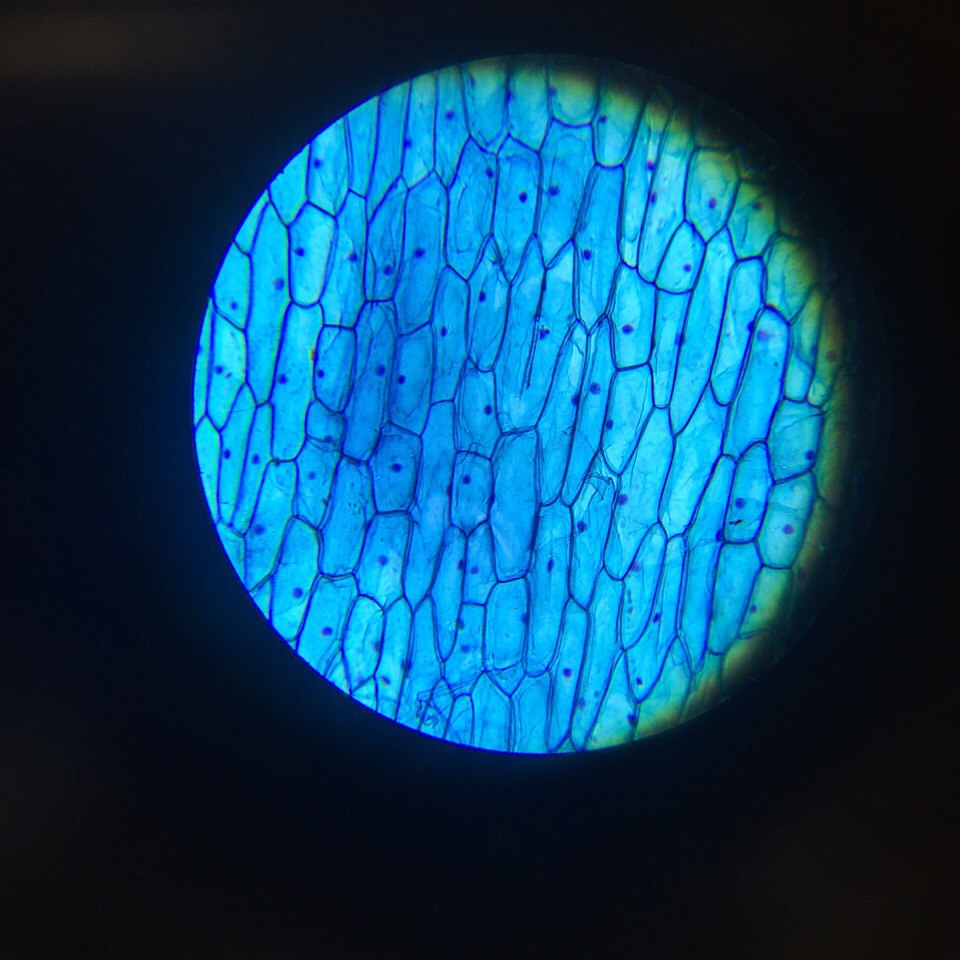
Companion photograph
Practice question
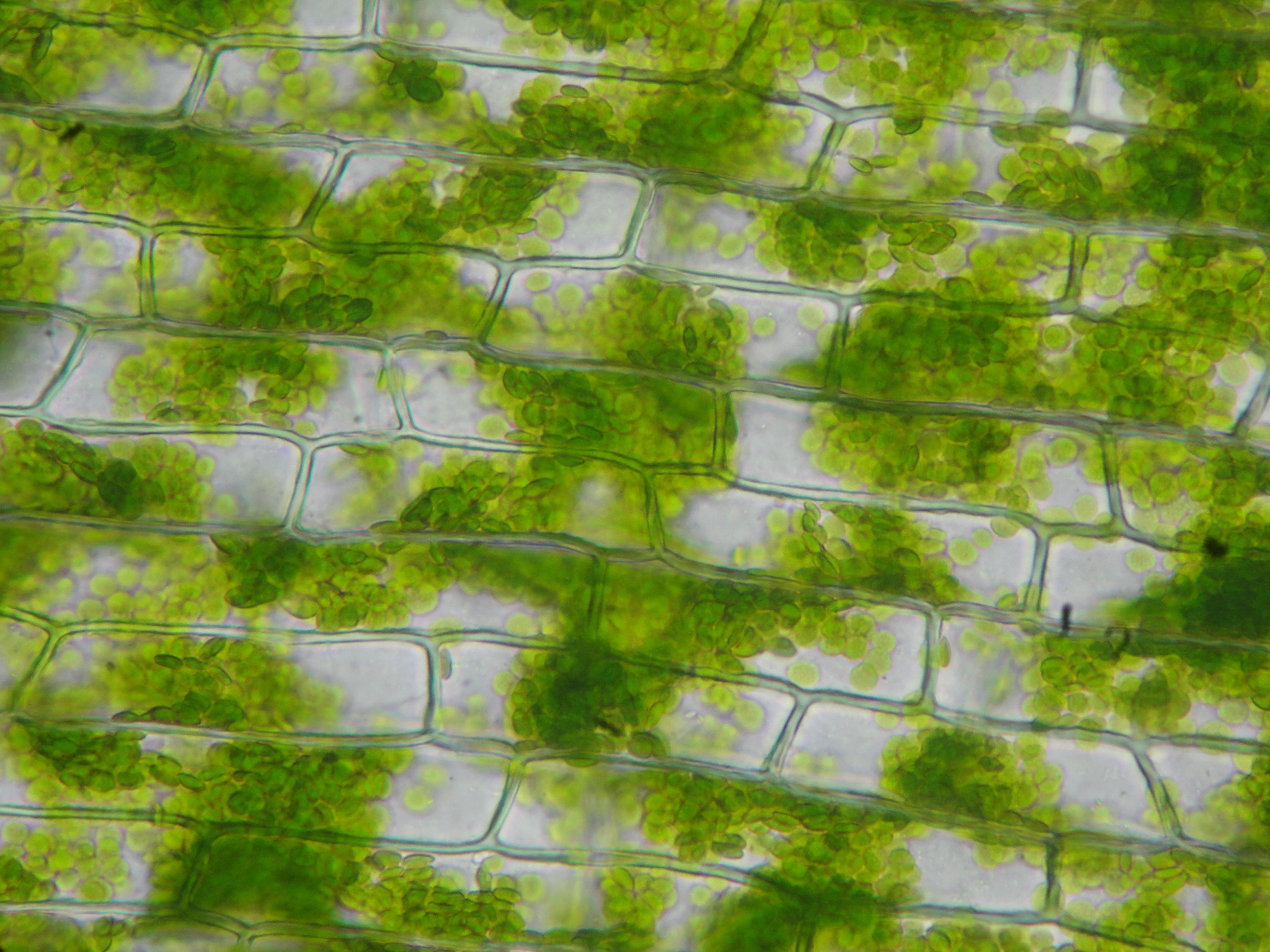
Compare the two plant-cell micrographs. In the onion epidermis, what are the clear outer boundaries and dark spots? In the Elodea leaf cells, what are the many green bodies, and what do the broad clear central regions resemble?
Photograph / micrograph recognition only. Neither image separately resolves the plasma membrane from the cell wall. Onion cytoplasm and vacuole are not distinguishable here; the Elodea cytoplasm and any nucleus are not clearly resolved. Do not claim the Elodea photo shows a nucleus.
Photo: Onion skin cells under a microscope · Katekor1Stained Allium cepa (onion) epidermis light micrograph.Photo: Chloroplasts - Microscopic view of Elodea canadensis · Juan Carlos Fonseca MataElodea canadensis leaf cells; source identifies chloroplasts.Show labelled key: Answer key for plant-cell-micrographs
Plant cells: onion epidermis and Elodea leaf
Chloroplasts - Microscopic view of Elodea canadensis
Photo key
The onion epidermis shows cell walls and nuclei. The Elodea leaf micrograph shows cell walls, many chloroplasts, and broad clear central regions consistent with vacuoles. The onion bulb epidermis does not normally contain chloroplasts. A nucleus is not clearly resolved in the Elodea image.
Neither image separately resolves the plasma membrane from the cell wall. Onion cytoplasm and vacuole are not distinguishable here; the Elodea cytoplasm and any nucleus are not clearly resolved. Do not claim the Elodea photo shows a nucleus.
Photo: Onion skin cells under a microscope · Katekor1Stained Allium cepa (onion) epidermis light micrograph.Photo: Chloroplasts - Microscopic view of Elodea canadensis · Juan Carlos Fonseca MataElodea canadensis leaf cells; source identifies chloroplasts.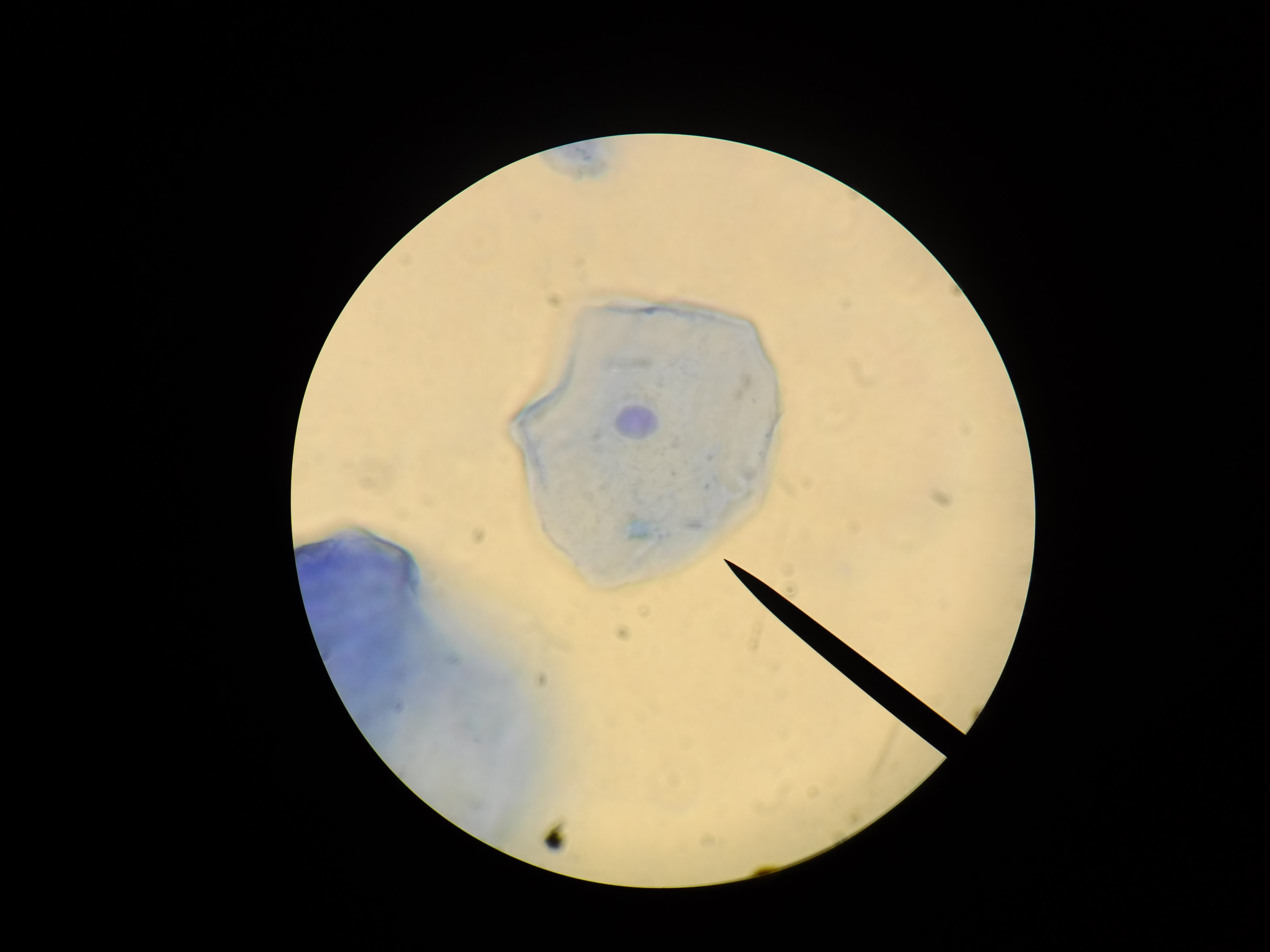
Practice question
In the clearest central cheek cell, identify the purple-stained structure, the pale interior, and the visible outer cell boundary.
Photograph / micrograph recognition only. This is a real microscope photograph of a human cheek-cell sample, not a model. The cell surface membrane cannot be distinguished separately from the outer boundary. The image has no scale bar and the source gives no stain information.
Photo: Human cheek cells from science class · KyrebSource describes a microscope photograph of the photographer’s own inner-cheek sample.Show labelled key: Answer key for animal-cell-micrograph
Human cheek-cell micrograph
Photo key
The purple-stained structure is the nucleus; the pale interior is cytoplasm. The cell boundary is visible, but the membrane is not separately resolved as a bilayer.
This is a real microscope photograph of a human cheek-cell sample, not a model. The cell surface membrane cannot be distinguished separately from the outer boundary. The image has no scale bar and the source gives no stain information.
Photo: Human cheek cells from science class · KyrebSource describes a microscope photograph of the photographer’s own inner-cheek sample.Compare labelled cell models with microscope images; not every structure in a model is visible in a simple light micrograph.
Topic group
Unit 1 · 1.1 · Active Transport Supplement
- Higher
Scope: Higher · Unit 1 tier: Higher · Topic 1.1 (higher)
Open revision guidance
What to know
- Active transport is the movement of substances against a concentration gradient.
- This process requires energy released during cellular respiration.
- Protein carriers in the cell membrane are required to 'pump' molecules (such as mineral ions in root hair cells) from low to high concentration.
What to do in an assessment
- Identify examples of active transport, such as uptake of nitrate ions by plant roots from soil where the concentration is lower than in the root cells.
In plain language
While diffusion and osmosis are passive, active transport is an 'uphill' process where the cell uses its own energy to force molecules across the membrane against the natural flow of concentration.
Self-check
Why does active transport require an energy input whereas diffusion does not?
Show the answer
Active transport uses energy to move substances against their concentration gradient through membrane transport proteins. Diffusion is passive net movement down a gradient and does not require that energy input. Many plant and animal cells obtain ATP through respiration involving mitochondria, but active transport is not universally dependent on having mitochondria.
Topic group
Unit 1 · 1.2 · Enzymes, Respiration, and Photosynthesis
- Core
Scope: Core · Topic 1.2 (core)
Open revision guidance
What to know
- Enzymes are biological catalysts made of proteins that accelerate chemical reactions.
- In the simple lock-and-key model, a substrate's shape is complementary to a particular enzyme's active site. The model explains specificity; it does not mean the enzyme can act only once.
- Respiration purpose: releasing energy for cellular processes.
- Aerobic respiration: Glucose + Oxygen -> Carbon dioxide + Water + Energy.
- Anaerobic respiration in humans: Glucose -> Lactic acid + Energy.
- Photosynthesis purpose: converting light energy into chemical energy stored in glucose.
- Photosynthesis word equation: Carbon dioxide + Water -> Glucose + Oxygen. Light energy is needed, and the reactions are enzyme-controlled.
- At lower temperatures, molecules move more slowly and successful collisions are less frequent. Activity generally rises towards an optimum; sufficiently high temperature can denature the enzyme by changing its active site. A low rate in the cold does not itself mean denaturation. Unsuitable pH can also change the active site.
- Respiration reactions are catalysed by enzymes. Aerobic respiration uses oxygen and produces carbon dioxide and water; human anaerobic respiration occurs without oxygen and produces lactic acid.
- Sports scientists study oxygen use, breathing, heart rate and recovery during different exercise demands to help improve training and performance. A sprint and a long-distance event place different demands on aerobic and anaerobic respiration.
- Within a suitable range, increasing light intensity or carbon dioxide supply can increase photosynthesis rate. Temperature affects the enzymes involved: cold slows reactions and excessive heat can damage enzymes. Conditions must therefore be controlled in investigations.
- Scientists apply enzyme properties in food production, such as lactase breaking down lactose in milk, and in cleaning or environmental processes, such as enzymes breaking down organic waste. The enzyme and conditions must suit the substance being treated.
- In medicine, prescribed pancreatic enzyme replacement helps people whose pancreas does not release enough digestive enzymes. The enzymes help break down food in the digestive system; this is a clinical treatment, not a reason to take enzyme supplements without medical advice.
- Understanding photosynthesis helps increase food production: growers can improve lighting, carbon dioxide supply and temperature in greenhouses. Extra energy and equipment cost money and may have environmental costs, so higher yield is not the only consideration.
What to do in an assessment
- Calculate rate of reaction by measuring product formed over time.
- Observe how temperature affects enzyme activity: reactions increase with temperature up to an optimum, then decrease due to denaturation.
- Investigate enzyme activity under teacher supervision: prepare equal amounts of starch and amylase separately at the chosen temperature, then mix and start the timer. Test equal small samples with iodine at regular intervals. The endpoint is when iodine no longer turns blue-black, showing starch is no longer detected.
- To compare temperatures, keep enzyme and starch concentrations, volumes, pH and sampling intervals constant. For a pH investigation, use the teacher's buffer solutions and keep temperature and other conditions constant. Repeat; a shorter time to the same endpoint indicates faster activity.
- Constructed enzyme results: equal starch samples reach the endpoint in 120 s and 60 s under two conditions. The second reaches the same endpoint twice as quickly. Do not conclude that every enzyme has the same optimum temperature or pH.
- Photosynthesis investigation: use teacher-prepared aquatic plants and change one factor at a time. Change light intensity by varying lamp distance while keeping water temperature, carbon dioxide supply, plant material and observation time constant. Allow the plant to adjust before recording.
- Collect oxygen volume over a fixed time where suitable apparatus is provided, or count bubbles as an estimate. Bubble sizes may vary, so count is not an exact oxygen-volume measurement. Repeat and compare rates; change carbon dioxide concentration or temperature in separate controlled investigations.
- Constructed oxygen data: 3 cm³ collected in 2 min gives a rate of 1.5 cm³/min; 5 cm³ in 2 min gives 2.5 cm³/min. These are illustrative measurements, not fixed rates for all plants.
In plain language
Enzymes are protein catalysts that speed up reactions without being used up. In the simple lock-and-key model, the substrate fits the active site, products are formed and the enzyme can be reused. Respiration releases energy through enzyme-catalysed reactions, not by a flame inside a cell. Human aerobic respiration uses oxygen; anaerobic respiration does not and produces lactic acid. Photosynthesis uses light energy to make glucose from carbon dioxide and water and is also enzyme-controlled.
Self-check
Why does the rate of enzyme-controlled reactions typically drop if the temperature exceeds the optimum?
Show the answer
High temperatures cause the protein structure of the enzyme to denature, meaning the shape of the active site changes so it no longer fits the substrate.
View diagrams
Dicot leaf section · Unlabelled practice · Schematic, simplified and not to scale. Show labelled key: Answer key for leaf-section
Dicot leaf section · Structure key · Schematic, simplified and not to scale. Compare the diagram with the explanation, then use practice mode before opening the key.
Topic group
Unit 1 · 1.2 · Advanced Energy Systems and Limiting Factors
- Higher
Scope: Higher · Unit 1 tier: Higher · Topic 1.2 (higher)
Open revision guidance
What to know
- Cells use ATP (adenosine triphosphate) as the primary energy currency for biological work.
- ATP is synthesized during respiration.
- Anaerobic respiration is less efficient because the glucose is not fully broken down, yielding far less ATP per molecule than aerobic respiration.
- Limiting factors in photosynthesis (CO2 concentration, light intensity, temperature) dictate the maximum potential rate of the reaction.
What to do in an assessment
- On a photosynthesis graph, a plateau when light intensity rises further indicates that another factor, such as carbon dioxide availability or temperature, is restricting the rate. It does not mean light has disappeared.
- Constructed data: at relative light intensities 1, 2 and 3, oxygen production is 2, 4 and 4 cm³/min. Increasing light from 2 to 3 does not increase the rate. Test a different factor under controlled conditions to identify the restriction.
- Compare energy transfer without memorising an unnecessary universal ATP yield: anaerobic respiration incompletely breaks down glucose, leaving chemical energy in lactic acid, so it provides much less ATP per glucose than aerobic respiration.
In plain language
In advanced terms, respiration isn't just about 'energy,' it's specifically about generating ATP molecules that the cell can easily 'spend.' Aerobic respiration is like a high-efficiency engine, while anaerobic is like an emergency backup that gives little return. For plants, the speed of photosynthesis depends on how much light, CO2, or heat is provided; adding more of one factor only helps until another one becomes the bottleneck (the limiting factor).
Self-check
If light intensity is the limiting factor, why does increasing the CO2 concentration alone not increase the rate of photosynthesis?
Show the answer
Because light intensity is the limiting factor. The plant already has more than enough CO2 to process the limited amount of light energy available.
Topic group
Unit 1 · 1.3 · Plant transport and human body systems
- Core
Scope: Core · Topic 1.3 (core)
Open revision guidance
What to know
- Xylem vessels transport water and dissolved minerals from roots to the rest of the plant.
- Phloem carries sugars, mainly sucrose derived from photosynthesis, from sources such as leaves to growing and storage tissues. It also carries other organic substances; amino acids are not direct products of photosynthesis.
- The leaf structure comprises the waxy cuticle, upper epidermis, palisade mesophyll (site of photosynthesis), spongy mesophyll (gas exchange), stomata (pores), and guard cells (which regulate stomatal opening).
- A root hair cell's long projection gives a large surface area for absorption of water and minerals. Water enters through the membrane by osmosis. The mechanism of mineral uptake is covered in the Higher lesson.
- Transpiration is the loss of water vapour from leaves. Evaporation from moist cell surfaces inside the leaf, followed by water-vapour diffusion out through stomata, helps draw water up through the xylem.
- Guard cells become turgid and open the stomatal pore when they gain water; losing water makes them less turgid and the pore closes. Stomata allow carbon dioxide entry, oxygen exit and water-vapour loss; closing them reduces water loss.
- The waxy cuticle reduces evaporation; epidermis protects the leaf and lets light reach underlying cells. Palisade cells contain many chloroplasts; air spaces in the spongy layer allow gas diffusion. Veins contain xylem supplying water and minerals and phloem transporting sugars.
- Transpiration involves evaporation from moist cell surfaces inside the leaf followed by water-vapour diffusion out through stomata. Water loss draws water through the xylem from the roots.
- Under otherwise comparable, well-watered conditions, warmth increases evaporation, moving air removes humid air around the leaf, and lower humidity increases the water-vapour gradient. Light often opens stomata. Severe water stress can close stomata, so these are not unconditional rules.
- Urban-planning example: trees cool surrounding areas partly through transpiration, but need accessible soil water. Providing suitable soil volume and permeable surfaces can support water supply; extensive sealed paving can restrict it. Plant selection and irrigation planning should account for local climate and water availability.
- The digestive system breaks down food into nutrients for absorption.
- Key structures include the mouth, oesophagus, stomach, liver, gall bladder, bile duct, pancreas, small intestine, large intestine, and anus.
- Peristalsis is the mechanism of muscular contractions that moves food through the gut.
- In the mouth, teeth mechanically break food into smaller pieces and saliva lubricates it. Salivary amylase is a carbohydrase that begins breaking starch into smaller sugars.
- The oesophagus carries food to the stomach by peristalsis. The stomach churns food, provides acidic conditions and contains protease that begins protein digestion.
- The pancreas releases digestive enzymes into the small intestine: carbohydrases break carbohydrates into small sugars, proteases break proteins down towards amino acids, and lipases break fats into fatty acids and glycerol.
- The liver produces bile. The gall bladder stores bile and releases it through the bile duct into the small intestine.
- The small intestine completes much of the chemical digestion and absorbs soluble products through its wall. Villi provide a large absorption surface and a good blood supply carries absorbed nutrients away.
- The large intestine absorbs water from the remaining material. Undigested material is passed out through the anus as faeces: this is egestion, not excretion.
- Bile emulsifies fats into smaller droplets and helps neutralise acid from the stomach. Emulsification is physical breakdown, not an enzyme-catalysed chemical reaction.
- A balanced diet includes protein, carbohydrates, fats, minerals, vitamins, fibre and water in suitable amounts. Protein supports growth and repair; carbohydrates provide a fuel for respiration; fats provide energy stores and insulation and form parts of cell membranes.
- Vitamins are needed in small amounts for healthy body functions. Minerals include calcium for healthy bones and teeth and iron for haemoglobin. Fibre adds bulk to food and supports movement through the gut; water acts as a solvent and supports transport and chemical reactions.
- Different foods have different energy contents because their compositions differ. Fat supplies more metabolic energy per gram than carbohydrate or protein, while water supplies none. A water-rich food can therefore have less energy per gram than a dry food. Compare complete foods and amounts rather than treating an energy value as a measure of overall nutritional quality.
- Frequent free-sugar intake promotes tooth decay because mouth bacteria produce acids from sugars. An energy intake consistently greater than energy use can lead to weight gain. A diet high in saturated fat can raise LDL cholesterol and cardiovascular risk; high salt intake can raise blood pressure. These are reasons to consider amounts and the overall diet, not to claim that all fats are harmful.
- More than 1000 microbial species have been identified across human gut microbiomes; this does not mean every person has all of them. Scientists are investigating links with physical and mental health; an association does not by itself establish a cause.
- Purpose: gas exchange (oxygen in, carbon dioxide out)
- Structure: nasal cavity, trachea, bronchi, bronchioles, alveoli, lungs, diaphragm, ribs, intercostal muscles
- Mucus/Cilia: mucus traps pathogens/dust, cilia sweep mucus out of airways
- Alveolus adaptation: thin walls (one cell thick) for short diffusion distance, dense capillary network, moist surface
- Inspiration: diaphragm flattens, ribs move up/out, pressure in lungs decreases, air enters
- Expiration: diaphragm relaxes, ribs move down/in, pressure in lungs increases, air exits
- Asthma: inflammation/narrowing of airways, restricted airflow
- Smoking damages cilia and lung tissue. Vaping is not risk-free: reported side effects include coughing and mouth or throat irritation, and its long-term risks are not fully known. This does not mean that smoking and vaping have identical risks. Children and non-smokers should not take up vaping.
- Peak flow is the maximum rate of airflow during a forceful expiration, commonly recorded in litres per minute.
- During quiet inspiration the diaphragm and external intercostal muscles contract, enlarging the chest cavity and lowering pressure so air flows in. During quiet expiration they relax; the chest cavity becomes smaller and pressure rises.
- An alveolus has a thin wall next to a thin capillary wall. Oxygen diffuses into the blood and reaches red blood cells; carbon dioxide diffuses from blood, including plasma, towards alveolar air. A large total surface area, ventilation and blood flow help maintain diffusion gradients.
- Smoking can damage cilia and lung tissue; smoke and other air pollutants can irritate airways. Asthma involves inflamed, narrowed airways, often with more mucus, reducing airflow. Avoiding smoking and reducing avoidable harmful exposure supports respiratory health.
- The blood consists of four components: red blood cells (oxygen transport), white blood cells (defense), platelets (clotting), and plasma (transport of nutrients, hormones, and waste).
- The heart is a muscular organ that contracts to pump blood.
- Valves in the heart and veins ensure one-way blood flow by preventing backflow.
- The heart contains four chambers: right/left atria and right/left ventricles.
- Specific heart valves include tricuspid, bicuspid, and semi-lunar valves.
- Blood route: body → vena cava → right atrium → tricuspid valve → right ventricle → pulmonary artery → lungs → pulmonary vein → left atrium → bicuspid valve → left ventricle → aorta → body.
- Semi-lunar valves at the exits of the ventricles prevent blood returning from the pulmonary artery and aorta. Atrioventricular valves prevent backflow into the atria.
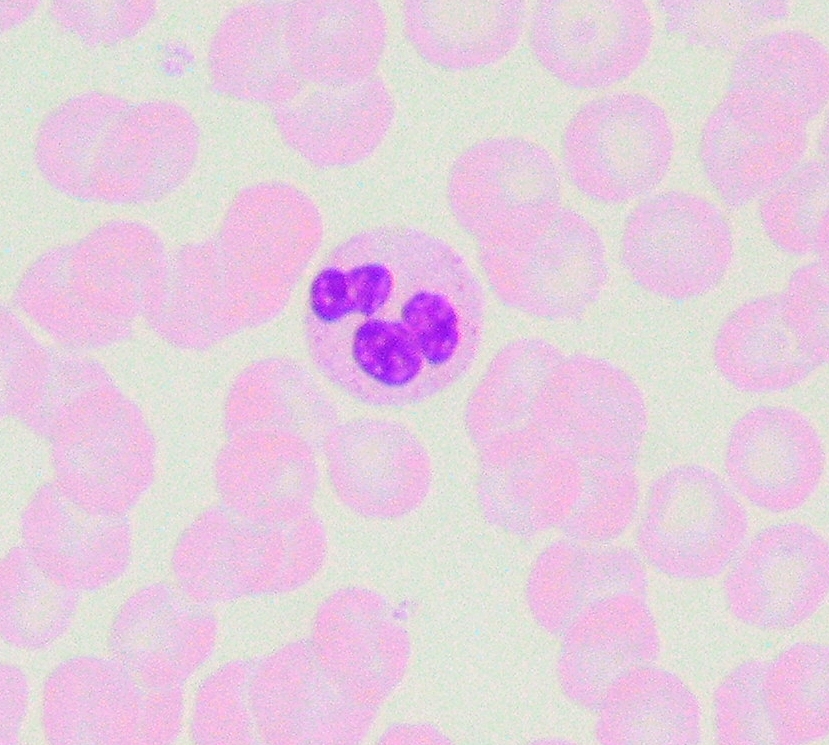
- In blood-smear images, red cells are numerous small discs with a paler centre and no nucleus; white cells are typically larger and have a visible nucleus; platelets are tiny cell fragments. Plasma is the liquid component of blood, not another cell type; a prepared dried smear does not show it as a pool of liquid.
- Humans have a double circulatory system: one loop to the lungs and one to the rest of the body.
- Arteries carry blood away from the heart at relatively high pressure; their thick walls help withstand it. Veins return blood at lower pressure, and valves help prevent backflow. Capillaries have very thin walls for exchange of gases, nutrients and waste with tissues.
- Coronary arteries deliver oxygenated blood to the heart muscle; coronary veins drain blood away from it. The muscle needs oxygen and nutrients supplied by this circulation, not just the blood passing through the heart's chambers.
- Risk factors for cardiovascular disease include diet, smoking, and lack of exercise.
- Cardiovascular disease can narrow coronary arteries, reducing oxygen delivery to heart muscle. Severe interruption can cause a heart attack. Smoking, inactivity, high blood pressure and an unsuitable diet are risk factors; family history and age also matter, so disease is not simply a judgement about lifestyle.
- Monitoring technology is advancing rapidly. Wearable optical sensors estimate pulse; ECG equipment records electrical heart activity. Trends can help assess fitness and alert clinicians to possible problems, but a wearable reading alone does not establish a diagnosis or guarantee prevention.
What to do in an assessment
- Compare the effects of temperature, light intensity, air movement and humidity on transpiration. Explain each mechanism: warmth affects evaporation, light often opens stomata, and moving or drier air changes conditions around the leaf. Do not assume every change increases the rate under severe water stress.
- In a teacher-supervised potometer investigation, use the prepared, airtight apparatus with a leafy shoot cut and fitted under water. Record movement of a capillary air bubble over a fixed time; vary only one condition, such as air movement, keeping other conditions and leaf area constant. Repeat after allowing adjustment.
- A potometer estimates water uptake, not exact transpiration: some absorbed water is used in growth and other processes. Bubble movement may also be affected by leaks, which invalidate the comparison.
- Constructed results in the same capillary: a bubble travels 1.2 cm in 2 min in still air and 2.4 cm in 2 min in moving air. Distance rates are 0.6 and 1.2 cm/min. The second is twice the first, consistent with greater water uptake when other variables are controlled.
- Label the parts of the digestive tract on a diagram.
- Describe the pathway of food from ingestion to egestion. Egestion removes undigested material; excretion removes metabolic waste.
- Explain how bile assists in lipid breakdown: emulsification increases surface area, so lipase can act more quickly. Bile does not itself chemically digest fat.
- Trace food through mouth → oesophagus → stomach → small intestine → large intestine → anus. The liver, gall bladder and pancreas supply substances to this pathway; food does not pass through those organs.
- Food tests are supervised school laboratory work, not home experiments. Follow the teacher's risk assessment, wear eye protection, handle hot apparatus as instructed and never eat a tested sample.
- Prepare a food solution or suspension using water and the teacher's method. Use separate clean portions for each test, so one reagent does not contaminate another. Compare with a known positive sample and a water negative control.
- Starch: add a few drops of iodine solution to a portion of the sample. A blue-black colour is positive; iodine remains orange-brown if starch is not detected.
- Reducing sugar, including glucose: add Benedict's reagent and heat in the teacher-prepared hot water bath for the specified time. A positive result changes from blue towards green, yellow, orange or a brick-red precipitate, depending on the amount of reducing sugar. A negative result remains blue. Keep volumes, heating time and temperature consistent when comparing samples.
- Protein: add prepared Biuret reagent as directed by the teacher. A lilac or purple colour is positive; the reagent remains blue if protein is not detected. This test does not require the heating used for Benedict's test.
- Food-energy investigation: the teacher sets up a safely mounted food sample beneath a tube or calorimeter containing a measured mass of water. Measure initial water temperature and food mass, burn the sample under supervision, stir the water as instructed, and measure final water temperature and remaining food mass. Calculate the mass of food actually burned.
- Compare energy transferred per gram, not temperature rise alone. Keep water mass, starting conditions, food-to-water distance and apparatus consistent; repeat measurements where safe. Heat loss to the air and apparatus and incomplete burning usually make measured energy lower than the food's full energy content.
- Constructed calculation using a supplied equation: energy transferred = water mass × 4.2 J/(g °C) × temperature rise. If 100 g of water rises from 20 °C to 30 °C, energy transferred = 100 × 4.2 × 10 = 4200 J. If 1.0 g of food burned, the measured result is 4200 J/g = 4.2 kJ/g. The constant and equation are supplied here; this is not a claim that every food has that energy content.
- Label a diagram of the respiratory system
- Describe the pathway of air from the nasal cavity to the alveoli
- Explain how the structure of the alveoli maximises gas exchange efficiency
- Identify the role of intercostal muscles in ribcage movement
- Under the teacher's hygiene and health instructions, use an individual mouthpiece and follow the meter's positioning instructions. Reset the peak-flow pointer, take a full breath, seal your lips around the mouthpiece without blocking it with your tongue, and blow out sharply. Repeat as instructed, recording the highest valid reading rather than treating it as a muscle-strength measurement. Do not share mouthpieces.
- Interpret measurements with appropriate comparison data or a person's established baseline; a lower result can indicate restricted airflow but one result is not a diagnosis. Do not perform exercise or breathing tests contrary to medical or teacher advice.
- Constructed readings: 340, 360 and 350 litres/minute. Record the highest valid reading, 360 litres/minute. Compared with the supplied personal baseline of 450 litres/minute, it is 90 litres/minute lower and 80% of that baseline. Technique and conditions can affect the result; this comparison alone does not diagnose asthma or prescribe a treatment.
- List two lifestyle choices that damage the lungs
- Identify red blood cells, white blood cells, and platelets from blood smear images.
- Use the displayed blood smear to distinguish the numerous pale discs from the central white cell with its purple-stained nucleus. Platelets are much smaller stained fragments, not complete red or white cells. Identify plasma as the liquid component in which cells were suspended before preparation; do not label another cell as plasma or claim that the dried image shows a pool of liquid.
- Label a diagram of the heart including all four chambers, major valves, and primary blood vessels.
- Explain how the double circulatory system ensures efficient oxygen delivery.
- Describe how coronary vessels maintain the heart muscle's function.
In plain language
Plants move water and nutrients through specialised 'pipes'. Xylem takes water from roots to leaves, while phloem distributes sugar made during photosynthesis. Plants also lose water through small holes in leaves called stomata, which open and close to balance the need for CO2 with the need to save water. Digestion breaks large, insoluble food molecules into small, soluble molecules that can be absorbed into the blood. It is not the same process as respiration, which releases energy from nutrients. Muscles in the gut wall contract in a wave behind the food and relax ahead of it: this is peristalsis. Digestive enzymes catalyse chemical breakdown. Bile is not an enzyme: it breaks large fat droplets into smaller droplets, increasing the surface area available to lipase, and helps neutralise acidic stomach contents entering the small intestine. A balanced diet provides suitable amounts of different nutrients rather than removing every food containing sugar or fat. Food tests identify particular substances; they do not measure the overall healthiness of a meal. In teacher-supervised calorimetry, heat released by a burning food sample warms a measured mass of water. Some heat escapes, so the result is an estimate, not the food's complete energy content. The gut microbiome is a diverse community of microbes. Research into its links with physical and mental health is ongoing, so claims of a proven cause or treatment need stronger evidence than an association. The respiratory system moves oxygen into your blood and waste carbon dioxide out of it. Air travels through the nose and windpipe (trachea) into branching tubes called bronchi and bronchioles, ending in tiny air sacs (alveoli) where gas exchange occurs. Sticky mucus traps debris, while tiny hairs (cilia) clean it away. We breathe by changing the volume of our chest cavity using the diaphragm and rib muscles. Increasing the volume lowers the pressure, drawing air in; shrinking the volume pushes air out. Conditions like asthma narrow these pathways, making it harder to breathe. A peak flow meter measures the maximum rate of airflow during a forceful expiration, not muscle strength. Your blood is made of different parts that carry oxygen, fight germs, and clot wounds. Your heart is a strong muscle that pumps this blood through your body. Valves inside your heart and veins work like one-way doors to make sure your blood flows in the right direction. Your heart sends blood through two loops: one to exchange gases at your lungs and one to supply your body. Coronary vessels provide the heart muscle's own circulation. Monitoring can record changes and help with fitness or clinical decisions, but it does not by itself prevent heart disease or establish a diagnosis.
Self-check
What is the primary difference in transport function between xylem and phloem? What is the primary function of peristalsis in the digestive system? After the proper supervised test procedures, a food sample turns iodine blue-black and Biuret reagent purple, but Benedict's reagent remains blue. What do the results indicate? How does the structure of an alveolus assist in gas exchange? What happens to the diaphragm during inspiration? Which heart valve prevents backflow from the left ventricle into the left atrium? Why is it necessary to have coronary vessels?
Show the answer
Xylem transports water and minerals upward from roots; phloem transports the products of photosynthesis (sugars) throughout the plant. Peristalsis involves waves of muscular contraction that push food along the digestive tract. The iodine result indicates starch and the Biuret result indicates protein. No reducing sugar was detected by Benedict's test under those conditions. Benedict's detects reducing sugars including glucose, not glucose alone; a negative result does not prove that absolutely no sugar is present. The wall of the alveolus and the capillary wall are both only one cell thick, providing a very short distance for oxygen and carbon dioxide to diffuse between the air and the blood. The diaphragm contracts and flattens, increasing the volume of the chest cavity and allowing air to enter the lungs. The bicuspid valve (also known as the mitral valve). The heart is a muscle that requires its own constant supply of oxygen and nutrients to continue pumping blood effectively.
View diagrams
Dicot leaf section · Unlabelled practice · Schematic, simplified and not to scale. Show labelled key: Answer key for leaf-section
Dicot leaf section · Structure key · Schematic, simplified and not to scale. Human digestive systemSimplified schematic; not to scale. - A
- B
- C
- D
- E
- F
- G
- H
- I
- J
- K
- L
- M
Show labelled key: Answer key for digestive-system
Human digestive systemSimplified schematic; not to scale. - AMouth
- BOesophagus
- CLiver
- DGall bladder
- EStomach
- FPancreas
- GDuodenum
- HIleum
- IColon
- JRectum
- KAnus
- LSalivary glands
- MBile duct
Human breathing systemSimplified schematic; not to scale. - A
- B
- C
- D
- E
- F
- G
- H
- I
- J
- K
Show labelled key: Answer key for breathing-system
Human breathing systemSimplified schematic; not to scale. - ALarynx
- BTrachea
- CBronchi
- DBronchioles
- EAlveoli
- FCapillaries
- GLung
- HRibs
- IIntercostal muscles
- JDiaphragm
- KNasal cavity
Alveolus and surrounding capillarySchematic, not to scale or a photograph. O₂ diffuses from alveolar air into blood; CO₂ diffuses from blood into the alveolus. Show labelled key: Answer key for alveolus-capillary
Alveolus and surrounding capillarySchematic, not to scale or a photograph. O₂ diffuses from alveolar air into blood; CO₂ diffuses from blood into the alveolus. - ATerminal bronchiole
- BAlveolar wall
- CMoist lining
- DCapillary wall
- ERed blood cell
- FPlasma
Section through the human heartSimplified schematic; not to scale. - A
- B
- C
- D
- E
- F
- G
- H
- I
- J
- K
- L
- M
- N
Show labelled key: Answer key for heart-section
Section through the human heartSimplified schematic; not to scale. - ARight atrium
- BRight ventricle
- CLeft atrium
- DLeft ventricle
- ESeptum
- FMuscular wall
- GTricuspid valve
- HBicuspid (mitral) valve
- ISemilunar valves
- JCoronary arteries
- KVena cava
- LPulmonary artery
- MPulmonary vein
- NAorta
Double circulation and major vesselsColour indicates oxygenation, not artery or vein type. Simplified schematic; not to scale. - A
- B
- C
- D
- E
- F
- G
- H
- I
- J
- K
- L
- M
- N
Show labelled key: Answer key for circulation-vessels
Double circulation and major vesselsColour indicates oxygenation, not artery or vein type. Simplified schematic; not to scale. - AHeart
- BLungs
- CPulmonary artery: heart → lungs
- DPulmonary vein: lungs → heart
- EAorta: away from heart
- FVena cava: to heart
- GGut
- HHepatic portal vein: gut → liver
- ILiver
- JHepatic artery: to liver
- KHepatic veins: from liver
- LKidney
- MRenal artery: to kidney
- NRenal vein: from kidney
Practice question
Compare the many pale disc-shaped cells with the larger purple-stained cell near the centre. Which is the red blood cell type, and what kind of white blood cell is visible?
Photograph / micrograph recognition only. This small unlabelled field contains erythrocytes and a neutrophil, not a lymphocyte. No scale bar is shown.
Photo: Blood-neutrophil1 · EchinaceapallidaWright-stained human peripheral blood smear.Show labelled key: Answer key for blood-smear-micrograph
Human blood smear
Photo key
The numerous pale cells are erythrocytes (red blood cells). The larger purple-stained cell is a neutrophil, identified by its segmented nucleus.
This small unlabelled field contains erythrocytes and a neutrophil, not a lymphocyte. No scale bar is shown.
Photo: Blood-neutrophil1 · EchinaceapallidaWright-stained human peripheral blood smear.Use these structures and the blood-smear image alongside the explanations of transport, digestion, breathing and circulation.
Topic group
Unit 1 · 1.3 · Mineral uptake
- Higher
Scope: Higher · Unit 1 tier: Higher · Topic 1.3 (higher)
Open revision guidance
What to know
- Root hair cells can take up mineral ions, such as nitrate and potassium ions, against their concentration gradient by active transport.
- Active transport requires energy (ATP) because minerals are often moved against their concentration gradient (from a lower concentration in the soil to a higher concentration in the root cytoplasm).
- Carrier proteins in the root cell membrane bind to specific ions to move them across the membrane.
What to do in an assessment
- Distinguish passive diffusion or osmosis, which does not require energy supplied by respiration, from active transport against a concentration gradient. Mineral uptake against the gradient uses active transport; do not claim that every movement of every mineral ion requires it.
In plain language
Mineral ions can still enter root cells when their concentration is already higher inside the cell than in the soil solution. Cells use energy to move ions against this concentration gradient through membrane proteins; they do not create additional minerals.
Self-check
Why does moving mineral ions into a root hair cell against their concentration gradient require energy?
Show the answer
Moving mineral ions from a lower concentration outside the cell to a higher concentration inside goes against their concentration gradient. Active transport through membrane proteins requires energy supplied by respiration.
Topic group
Unit 1 · 1.4 · Energy Transfer and Ecosystem Interactions
- Core
Scope: Core · Topic 1.4 (core)
Open revision guidance
What to know
- An ecosystem comprises all living organisms (biotic factors) and their physical environment (abiotic factors) interacting in a specific area.
- A food chain is a model showing the transfer of energy between different trophic levels, starting from a producer, typically plants, to various consumers.
- A food web represents multiple interconnected and overlapping food chains, illustrating complex feeding relationships within an ecosystem.
- Studying food webs enables scientists to assess the stability and overall health of ecosystems by observing how species interact.
- Food-chain arrows point from the organism eaten towards the consumer, showing energy transfer. Producers form the first trophic level, followed by primary consumers and then higher consumers.
- Not all biomass is eaten or digested. Energy remains in uneaten material, passes into waste, or is transferred to the surroundings through respiration and heating. Therefore only part becomes biomass available at the next trophic level; the percentage is not always 10%.
- Worked food-web interpretation: if a predator eats both rabbits and mice, fewer rabbits may increase predation on mice. The alternative prey can buffer the predator's food supply, but the indirect effect on mice must be checked against evidence. Scientists compare such links across places and time to assess stability.
- Biotic factors are living components of an ecosystem, such as prey, predators, pathogens, and competitors.
- Abiotic factors are non-living chemical and physical parts of the environment, such as temperature, light intensity, moisture levels, and pollutants.
- Population sizes are regulated by biotic factors like competition for resources (food/space), predation, and the spread of disease.
- Invasive non-native species can disrupt ecosystems by outcompeting native species for resources or by introducing new diseases.
- Competition for food, water or space can limit population growth; predation removes prey; disease can increase death rates. Pollution may damage organisms or change habitat conditions. Not every introduced species is invasive: invasive species spread and cause harm in the ecosystem.
- Scientists use species' environmental requirements and population data to predict climate impacts. For example, reduced water availability can limit plant growth, reducing food and habitat for other organisms; temperature changes can alter survival and distribution. Predictions have uncertainty and should be tested against monitoring data.
What to do in an assessment
- Calculate the efficiency of energy transfer between trophic levels using the formula: Efficiency (%) = (Energy transferred to the next level / Energy available at the previous level) × 100.
- Constructed example: of 1000 J available in producer biomass, 100 J becomes new primary-consumer biomass. Transfer efficiency is (100 / 1000) × 100 = 10%. This compares energy retained in new biomass at the two levels, not all the energy the consumer uses in respiration.
- Interpret food webs to identify the flow of energy and the impact of changes to one species population on the rest of the web.
- Analyse data sets or graphs showing population changes over time to correlate these fluctuations with specific biotic or abiotic stressors.
- Predict ecosystem impacts: When presented with scenarios of climate change or environmental shifts, apply knowledge of factors like water availability or temperature to hypothesize changes in species distribution or population health.
- Constructed monitoring data: fish counts decrease from 50 to 20 after a pollution event, a drop of (50 − 20) ÷ 50 × 100 = 60%. This supports investigating pollution, but other changes such as disease, food supply or sampling effort must be checked before claiming causation.
In plain language
An ecosystem includes organisms and their physical environment interacting in a particular area. Food chains show energy transfer through feeding, and overlapping chains form food webs. Scientists study these relationships to assess ecosystem health and stability; monitoring does not guarantee that every population stays unchanged. Living things face challenges from other living things (biotic) and the environment itself (abiotic). Whether a population grows or shrinks depends on how well they handle these factors, such as finding food or dealing with a changing climate. Sometimes, new species introduced from elsewhere can cause major problems by stealing resources from local animals.
Self-check
In a constructed food-chain example, 500 J is available in caterpillar biomass and 50 J becomes new bird biomass. What is the percentage efficiency of this transfer? Identify which of the following is an abiotic factor: competition, temperature, disease, predation.
Show the answer
10% (50 / 500 = 0.1; 0.1 × 100 = 10%). Temperature.
View diagrams
Food web Food webHypothetical habitat · schematic, not to scaleTarget Organism Trophic role A ________________ ________________ B ________________ ________________ C ________________ ________________ D ________________ ________________ E ________________ ________________ F ________________ ________________ G ________________ ________________ Food → Consumer A B B C C D A E E F B G G D Show labelled key: Answer key for food-web
Food web Food webHypothetical habitat · schematic, not to scaleTarget Organism Trophic role A Grass Producer B Grasshopper Primary consumer C Frog Secondary consumer D Snake Tertiary consumer E Rabbit Primary consumer F Fox Secondary consumer G Bird Secondary consumer Food → Consumer Grass Grasshopper Grasshopper Frog Frog Snake Grass Rabbit Rabbit Fox Grasshopper Bird Bird Snake Compare the diagram with the explanation, then use practice mode before opening the key.
Topic group
Unit 4 · 4.1 · Human Impact on Ecosystems
- Core
Scope: Core · Topic 4.1 (core)
Open revision guidance
What to know
- Biodiversity considers the variety of species and numbers of individuals within them. Abundance means how many organisms occur; distribution means where they occur. Use comparable sampling effort and identification when comparing places.
- Fertiliser run-off can stimulate algal growth, shading plants. Decomposition of dead material uses dissolved oxygen, harming oxygen-dependent organisms. Untreated sewage also supplies organic material for oxygen-consuming decomposition.
- Legislation can protect species and habitats and restrict damaging activities, but requires monitoring and enforcement and can affect land use. Conservation NGOs restore habitats, monitor populations, support research and public education, and campaign for protection.
- Fertilisers replace mineral nutrients and can increase yield but run-off can harm waterways. Pesticides reduce crop losses but may affect non-target species and select resistance. Antibiotics treat bacterial disease in livestock, but unnecessary use increases resistance risks.
- Intensive battery systems use less space per animal and restrict movement, so less energy may be used for activity and more can be available for growth. They can restrict natural behaviour and concentrate waste and disease risks; feed production still requires land and resources. Biological control uses another organism against a pest, reducing some pesticide use, but the control organism may spread or affect non-target species.
- Some persistent industrial pollutants and pesticides enter food chains and accumulate in organisms. Predators may receive concentrated pollutants from many contaminated prey, affecting health or reproduction; not every chemical biomagnifies.
- Photosynthesis takes carbon from carbon dioxide into plant material; feeding transfers carbon compounds between organisms. Plants, animals and decomposers release carbon dioxide during respiration. When dead material is buried under conditions that limit decay, some carbon can remain stored and fossil fuels form over long periods. Combustion converts carbon in fuels into carbon dioxide; it does not simply release carbon dioxide stored inside the fuel.
- Burning fossil fuels transfers long-stored carbon to the atmosphere rapidly. Clearing vegetation reduces carbon uptake and can release stored carbon. Conservation can conflict with demand for food, jobs and development; compare benefits, harms, alternatives and long-term consequences rather than assuming one demand always wins.
What to do in an assessment
- Calculate species abundance using random quadrat sampling
- Map species distribution using transect lines
- Use indicator species (e.g., lichen for air, bloodworms for water) to estimate pollution levels
- Quadrat method: define the area and species, generate random coordinates, place the same-sized quadrat at each coordinate and use a consistent rule for organisms on its boundary. Repeat sufficiently to estimate abundance; choosing only interesting patches biases the sample. Work at an approved site without damaging habitats.
- Constructed abundance estimate: ten 1 m² quadrats contain 100 plants of one species altogether. Mean abundance = 100 ÷ 10 = 10 plants/m². For a comparable 1000 m² area, estimated abundance = 10 × 1000 = 10 000 plants, not a census of every plant.
- To investigate distribution, lay a transect along an environmental gradient and sample at fixed intervals with consistent quadrats. Record distance, abundance and relevant conditions; a transect describes changes along that route rather than automatically representing the whole area.
In plain language
One measure of biodiversity considers both the variety of species and the numbers of individuals within them in an area. Farming, sewage disposal and industrial pollution can change nutrient levels or introduce harmful chemicals. Laws and conservation groups help protect species and habitats, while decisions must also consider food production and economic needs. Our use of land and energy also changes the carbon cycle.
Self-check
If untreated sewage is released into a stream, what happens to the oxygen levels and indicator species found there?
Show the answer
Micro-organisms decomposing organic material in sewage use dissolved oxygen. Oxygen-sensitive species may decline while tolerant species such as bloodworms or sludge worms become more common. Interpret their abundance alongside oxygen measurements; one organism alone does not prove the pollution's source.
Topic group
Unit 4 · 4.2 · DNA Structure and Function
- Core
Scope: Core · Topic 4.2 (core)
Open revision guidance
What to know
- DNA is located in the nucleus within structures called chromosomes
- DNA molecules consist of a double helix structure
- DNA sequences act as a code for the formation of specific proteins
- The complementary base-pairing system uses A-T and C-G pairings
- The protein-coding genes studied here are sections of DNA carrying instructions for specific proteins
- A mutation is a change in the DNA sequence
- Mutations may result from copying errors or be made more likely by mutagens such as ionising radiation and certain chemicals. Their effects can be harmful, beneficial or undetectable; a mutation does not automatically change appearance.
- Discovering DNA's structure involved observations, experiments and model-building by many researchers across disciplines. Scientific claims need evidence and appropriate credit, not only the names associated with a final model.
- Mitosis produces new genetically identical body cells.
- A stem cell is an undifferentiated cell capable of becoming specialised.
- Embryonic stem cells in early development can give rise to a wide range of body-cell types. Adult stem cells in tissues such as bone marrow usually form a more limited range for repair and replacement.
- Using a patient's own adult stem cells can reduce immune-rejection and donor-matching problems, but does not remove every treatment risk. Donor embryonic cells offer wider differentiation potential but can be rejected and raise embryo-use concerns.
- Medical benefits of stem cells include treating diseases by replacing damaged tissues.
- Risks include potential immune rejection and the risk of uncontrolled growth (tumors).
- Ethical issues involve the destruction of embryos for research.
- Public perception is influenced by scientific understanding, media coverage, trust in researchers and healthcare services, personal treatment experiences and beliefs. Different views deserve fair representation; assess evidence rather than treating publicity as proof.
- Arguments for embryonic research include potential treatments and scientific understanding; concerns include destroying embryos, consent and views about moral status. Adult cells avoid that particular embryo issue but have more limited differentiation potential and are not risk-free.
- Genes are arranged along chromosomes. In the diploid inheritance model, chromosomes occur in pairs with one of each pair inherited from each parent.
- Gametes are made by meiosis and contain half the chromosome count of body cells.
- An allele is a version of a gene. In a simple complete-dominance model, a dominant allele is expressed with one copy; a recessive allele is expressed only when no dominant allele is present.
- Homozygous means two identical alleles at the gene being studied; heterozygous means two different alleles. Genotype is the allele combination; phenotype is an observable characteristic, including functions as well as appearance, affected by genotype and sometimes environment.
- Genetic diseases involve genetic changes and may be inherited; new mutations can also arise. A family-history pattern helps investigate inheritance but is not a diagnosis by itself.
- Testing can help explain risks and guide care, but raises consent, confidentiality, psychological and family-information issues, including a person's wish not to know.
- Understanding genetic disease and treatments continues to develop. New approaches, including gene-based therapies, require evidence of safety and benefit rather than an assumption that every genetic condition can now be cured.
What to do in an assessment
- Identify DNA on a diagram as a double-stranded helix found inside the nucleus
- Describe the complementary base-pairing rule where Adenine pairs with Thymine and Cytosine pairs with Guanine
- Explain that mutations can alter the genetic information passed to cells
- Pair the example strand A–C–T–G with T–G–A–C. A–C is not a complementary pair merely because the letters are next to one another on one strand.
- Compare the production of cells via mitosis with the specialisation process of stem cells.
- Identify the roles of embryonic versus adult stem cells in an organism.
- Evaluate the ethical arguments for and against embryonic stem cell research.
- Discuss how media coverage shapes public opinion on biotechnology.
- Describe the relationship between genes and chromosomes.
- Compare chromosome numbers in body cells versus gametes.
- Use a Punnett square to predict monohybrid crosses for sex or disease inheritance.
- Interpret pedigree analysis charts.
- Worked monohybrid cross: each Aa parent makes A or a gametes. Combining A with A, A with a, a with A and a with a gives AA, Aa, Aa, aa. Genotype probabilities are 1/4 AA, 1/2 Aa and 1/4 aa; with complete dominance, phenotype probabilities are 3/4 dominant and 1/4 recessive.
- Worked recessive-disease model: two unaffected carriers Dd give DD, Dd, Dd and dd. The chance of an affected dd child is 1/4, an unaffected carrier 1/2 and an unaffected non-carrier 1/4. Each pregnancy is a new probability, not a guarantee of one affected child in every four.
- In the usual XX/XY model, an XX parent contributes X and an XY parent contributes X or Y, giving about equal chances of XX or XY. These usually correspond to female and male development; this simplified chromosomal model does not describe every variation in human sex development.
- Read a pedigree's key first: commonly squares represent males, circles females, shading an affected phenotype, a horizontal line partners and descending lines offspring. In a simple recessive model, unaffected parents of an affected child must both carry the recessive allele; do not infer every unshaded person's exact genotype.
In plain language
In typical nucleated animal and plant cells, nuclear DNA is organised into chromosomes. Its two strands form a double helix, like a twisted ladder, with complementary bases pairing A with T and C with G. Here we study protein-coding genes: sections of DNA carrying instructions for specific proteins. A change in the DNA sequence is a mutation; it may affect an organism, but not every mutation changes its appearance or function. Mitosis is a type of cell division; a stem cell is a type of undifferentiated cell. They are not alternatives: stem cells can divide by mitosis, renewing their population or supplying cells that become specialised. Some stem-cell treatments, such as blood stem-cell transplants, already replace damaged cells. Many proposed treatments remain under research; a possible future benefit is not a guaranteed cure. Compare the source of cells, evidence, risks and ethical consequences. Inheritance is the process of passing traits from parents to offspring. Your DNA is organised into genes on chromosomes. Because body cells have chromosome pairs, you get one set from each parent. Gametes (sperm and eggs) only carry half, ensuring the right amount when they fuse. We use Punnett squares to predict the probability of traits or diseases appearing in offspring. A pedigree chart tracks these traits through family generations. While understanding helps treat diseases, it also raises ethical questions about genetic testing.
Self-check
What are the four bases in DNA and how do they pair up? Can a stem cell divide by mitosis? Explain why these terms describe different things. Name two factors that influence how the public perceives stem cell technology. If a body cell has 46 chromosomes, how many does a gamete have? What is the tool used to predict the probability of monohybrid cross outcomes?
Show the answer
The four bases are Adenine (A), Thymine (T), Cytosine (C), and Guanine (G). They pair as follows: A with T, and C with G. Yes. Mitosis describes division producing genetically identical daughter cells, apart from any new mutation; a stem cell describes an undifferentiated cell capable of becoming specialised. Lack of scientific understanding and media influence. 23 chromosomes. A Punnett square.
View diagrams
Monohybrid inheritance · complete dominance
Constructed monohybrid model with gametes shown on both grid axes.
Punnett square 1 · gametes from each parent: A or a
Separate XX × XY model · X gametes from one parent; X and Y gametes from the other
Constructed complete-dominance model: both parents produce A and a gametes. A is dominant; a is recessive. Fill the grid from those given gametes.
Separate XX × XY chromosome model: X gametes meet X or Y gametes. Expected 1/2 XX and 1/2 XY; this is not a guarantee for four children or a universal identity claim.
Use the displayed gametes to complete both grids and calculate genotype and phenotype probabilities. WJEC GCSE Biology Double Award · common content 4.2.3 · constructed teaching model; no patient data. Show labelled key: Answer key for double-award-monohybrid-cross
Monohybrid inheritance · complete dominance
Constructed monohybrid model with gametes shown on both grid axes.
Punnett square 1 · gametes from each parent: A or a
Separate XX × XY model · X gametes from one parent; X and Y gametes from the other
Constructed complete-dominance model: both parents produce A and a gametes. A is dominant; a is recessive. Fill the grid from those given gametes.
Separate XX × XY chromosome model: X gametes meet X or Y gametes. Expected 1/2 XX and 1/2 XY; this is not a guarantee for four children or a universal identity claim.
For this constructed complete-dominance example, A is dominant: AA and Aa show the dominant phenotype, while aa shows the recessive phenotype. Genotypes are 1 AA : 2 Aa : 1 aa; phenotypes are 3 dominant : 1 recessive. The separate XX × XY model gives expected probabilities of 1/2 XX and 1/2 XY, not a guarantee for four children. WJEC GCSE Biology Double Award · common content 4.2.3 · constructed teaching model; no patient data. Pedigree · autosomal recessive model
Hypothetical two-generation family under an autosomal recessive model.
Model autosomal recessive: A is the normal dominant allele; a is the recessive allele, and affected individuals are aa. Assume no new mutations.
Pedigree symbols: square = male; circle = female; filled = affected.
- Unaffected father
- Unaffected mother
- Affected son
- Unaffected daughter
Use the given model and family relationships to infer the parents’ genotypes and state what can be concluded about their daughter. WJEC GCSE Biology Double Award · common content 4.2.3 · constructed teaching model; no patient data. Show labelled key: Answer key for double-award-pedigree
Pedigree · autosomal recessive model
Hypothetical two-generation family under an autosomal recessive model.
Model autosomal recessive: A is the normal dominant allele; a is the recessive allele, and affected individuals are aa. Assume no new mutations.
Pedigree symbols: square = male; circle = female; filled = affected.
- Unaffected father
- Unaffected mother
- Affected son
- Unaffected daughter
Genotypes: father Aa; mother Aa; affected son aa; unaffected daughter AA or Aa.
Under the stated autosomal recessive model, an affected person is aa. With no new mutations, unaffected parents of an affected child must each be Aa. The unaffected daughter could be AA or Aa; her status alone cannot identify her genotype. Each future birth from Aa × Aa has a 1/4 probability of being aa. This probability is not a ratio inferred by counting this small pictured family. WJEC GCSE Biology Double Award · common content 4.2.3 · constructed teaching model; no patient data. Constructed inheritance models: use the given gametes and family relationships. Expected probabilities apply to each birth; they do not guarantee the composition of a small family.
Topic group
Unit 4 · 4.2 · Protein Synthesis and Control
- Higher
Scope: Higher · Unit 4 tier: Higher · Topic 4.2 (higher)
Open revision guidance
What to know
- A DNA triplet is a sequence of three bases. Triplets in a coding sequence specify amino acids or termination; 'codon' usually refers to the corresponding messenger RNA triplet.
- The order of triplets determines the specific sequence of amino acids in a protein
- Proteins include enzymes and protein hormones that help control cell metabolism and function. A changed sequence may alter protein shape and function, but some base changes have no effect on the amino-acid sequence.
What to do in an assessment
- Calculate the number of bases required to code for a protein with a specific number of amino acids (e.g., a protein of 10 amino acids requires 30 bases)
- Explain how the triplet code specifies a protein's amino-acid sequence, influencing its shape, function and role in the cell
In plain language
DNA's coding sequence is read in triplets of bases to specify the amino-acid sequence of a protein, with termination signals marking its end. The amino-acid order affects the protein's shape and function. Proteins such as enzymes and protein hormones help control cell activities; not every protein is an enzyme or hormone.
Self-check
Ignoring termination signals and other non-coding DNA, how many bases specify a sequence of 50 amino acids?
Show the answer
50 × 3 = 150 bases specify those amino acids. This simplified calculation excludes the termination triplet and other DNA outside that amino-acid-coding sequence.
Topic group
Unit 4 · 4.3 · Variation, Natural Selection, and Gene Technology
- Core
Scope: Core · Topic 4.3 (core)
Open revision guidance
What to know
- Variation is categorised as heritable (passed via genes) or non-heritable (environmental).
- Mutation can produce new alleles; sexual reproduction combines genetic information into new allele combinations. Mutations do not occur because an organism decides it needs an adaptation.
- Natural selection makes individuals with advantageous inherited variants more likely to survive and reproduce in their particular environment, so those alleles become more common.
- Fossils show organisms changing across time; DNA similarities support shared ancestry; observed antibiotic resistance shows selection over generations. Resistant bacteria survive treatment and reproduce, not because antibiotics teach individual bacteria to become resistant.
- Genetic modification (GM) involves altering DNA by adding, removing, or editing genes.
- Genetic profiling compares patterns in DNA for identification, relatedness and some medical investigations. Stored profiles require consent, secure access and limits on sharing; they can reveal information about relatives and expose people to discrimination.
- Adaptations increase the chance of surviving and reproducing in particular conditions, not every possible environment. A rapidly changing habitat can eliminate populations before favourable inherited variants spread, causing extinction.
What to do in an assessment
- Distinguish inherited allele differences from acquired changes such as scars. Height is influenced by genes and nutrition; skin pigmentation is influenced by genes and sunlight. Do not label either as exclusively genetic or environmental.
- Explain natural selection: inherited variation exists in a population; selective pressures favour some variants; those individuals are more likely to survive and reproduce; their alleles become more common over generations. Mutation can create new alleles and sexual reproduction recombines them.
- Analyse a simple genetic profile (e.g., identifying markers or comparing bands in a gel electrophoresis diagram).
- Compare agricultural benefits such as nutrient-enriched or pest-resistant crops with risks: modified genes may spread to related plants, pests may evolve resistance, non-target species may be affected and planting few varieties can reduce crop diversity.
- Medical uses include modified microbes producing human insulin and gene-based treatments for some conditions. Unintended genetic changes, immune reactions and delivery difficulties require safety testing; evidence, cost and fair access matter. A potential treatment is not a guaranteed cure, and effects depend on the modification and setting.
- Constructed profiling comparison: a sample has bands at positions 1, 3 and 5; A has 1, 3 and 5; B has 1, 4 and 5. A matches this set of markers and B does not. A match supports further investigation but does not alone prove guilt or exclude contamination and other matching individuals.
In plain language
Variation describes differences between organisms caused by genes or environment. Natural selection drives evolution by favoring traits that help organisms survive in their specific environment. If environments change too quickly, species face extinction. Scientists can now edit DNA (genetic modification) and read DNA patterns (profiling), which offers medical advancements but raises ethical concerns.
Self-check
How does antibiotic resistance in bacteria serve as evidence for natural selection?
Show the answer
Random mutation can create resistance in a bacterial population. An antibiotic kills or inhibits susceptible bacteria, while resistant variants are more likely to survive and leave descendants. Resistance alleles become more common over generations; the population changes, rather than antibiotics teaching each bacterium to adapt.
Topic group
Unit 4 · 4.3 · Concepts in Variation and Ethics
- Higher
Scope: Higher · Unit 4 tier: Higher · Topic 4.3 (higher)
Open revision guidance
What to know
- Continuous variation: A range of values between two extremes with no distinct groups (e.g., human height). Usually controlled by many genes (polygenic) and environmental factors.
- Discontinuous variation has distinct categories with no intermediate values, such as ABO blood group. This example is determined by alleles at one gene; do not assume every categorical characteristic must be controlled by one gene or unaffected by the environment.
- Rapidly advancing genetic technologies require society to review evidence, consent, access and regulation. Without appropriate safeguards they can enable misuse or unequal access; do not assume that every existing law is always behind every new technique.
What to do in an assessment
- Continuous measurements can take intermediate values and can be grouped in a histogram; separate categories can use a bar chart with gaps. Continuous data need not form a bell curve.
- Evaluate the societal need for laws concerning the storage and privacy of genetic profiles to prevent discrimination in employment or insurance.
In plain language
Higher-level understanding requires distinguishing between smooth ranges of traits (continuous) and strict categories (discontinuous). Furthermore, we must acknowledge that scientific progress in gene editing and profiling often outpaces our ability to create fair, ethical laws, requiring society to constantly update its approach.
Self-check
Why is human height considered continuous variation, while ABO blood type is discontinuous?
Show the answer
Height is continuous because it is polygenic and influenced by diet/health, resulting in a continuous range of possible measurements. Blood type is discontinuous because it is determined by specific antigens on red blood cells, resulting in distinct, separate categories (A, B, AB, or O) with no values in between.
Topic group
Unit 4 · 4.4 · The Nervous System and Reflex Actions
- Core
Scope: Core · Topic 4.4 (core)
Open revision guidance
What to know
- The nervous system consists of the central nervous system (brain and spinal cord) and peripheral nerves.
- Sense organs contain receptor cells that respond to specific stimuli: light, sound, touch, temperature, and chemicals.
- A voluntary response is a conscious decision; an involuntary (reflex) response is a rapid, automatic reaction to a stimulus.
- Receptors detect stimuli; electrical impulses travel along neurones to the central nervous system. It processes information and sends impulses to effectors, such as muscles or glands, which carry out a response.
- The nervous system can be impaired by illness, disease, or drugs.
- Temperature regulation keeps core temperature in a suitable range, normally around 37°C, supporting enzymes and other cell processes. Excessive heating can disrupt proteins; cooling slows many reactions.
- The skin structure includes: hair, erector muscle, sweat gland, sweat duct, sweat pore, and blood vessels.
- In the cold, erector muscles contract and raise hairs, helping trap an insulating air layer; this effect is small in humans compared with furry mammals. In warmth the muscles relax and hairs lie flatter.
- Sweat glands produce sweat, which travels through the duct and pore to the surface to cool the body via evaporation.
- Blood vessels (arterioles) undergo vasodilation to lose heat or vasoconstriction to conserve heat.
- Hormones are chemical messengers carried in the blood to specific target organs. Insulin is a protein hormone; not all hormones have a protein structure.
- Insulin is a hormone that reduces blood glucose levels.
- Type 1 diabetes usually follows loss of insulin-producing cells and requires insulin treatment. In type 2, cells respond less well to insulin and insulin production may later become insufficient.
- Symptoms can include thirst, frequent urination, tiredness and unexplained weight loss; type 2 can initially have few noticeable symptoms. High blood glucose and glucose in urine are measured signs, not a diagnosis from one classroom test. Treatment is individually supervised: type 1 needs insulin, delivered by injections or a pump; type 2 may use dietary/activity changes, medicines and sometimes insulin.
- Monitoring includes finger-prick blood tests and wearable sensors that estimate glucose in fluid around cells. Sensors can give trends and alerts but have limitations and may lag behind blood glucose; monitoring technology continues to develop.
What to do in an assessment
- Distinguish conscious control from an automatic response using voluntary ruler-catching and an involuntary pupil response; the detailed reflex-arc structures are Higher content.
- Distinguish between voluntary and involuntary actions.
- Voluntary-response method: with consent, hold a ruler above a partner's open fingers at a consistent starting position, release without a predictable countdown and record distance fallen before catching. Repeat, keep hand and setup consistent and use a supplied conversion table if reaction time is needed. This measures a voluntary response, not a purely spinal reflex.
- For an involuntary response, use only the teacher's approved observation of pupils changing with ordinary room illumination. Never shine bright beams into eyes or use painful stimuli. Volunteers may opt out; observations are not medical tests.
- Compare repeat results and consider practice, attention, anticipation and measurement resolution. Keep results anonymous rather than ranking people by supposed health.
- Identify and label all structures of the skin in a cross-sectional diagram.
- Explain how the contraction of erector muscles alters the angle of hair follicles.
- Describe the pathway of sweat from production in the gland to evaporation on the skin surface.
- Contrast the state of blood vessels near the skin surface in hot versus cold environments.
- Identify the role of insulin in lowering blood glucose levels.
- Compare insufficient insulin production in type 1 with reduced insulin sensitivity and possible insufficient production in type 2.
- Artificial-urine investigation: use only teacher-prepared samples, a known glucose positive control and a glucose-free negative control. Add Benedict's reagent and heat in the approved water bath, with goggles and consistent volumes, temperature and time; compare blue versus coloured precipitate. Do not use human urine.
- Benedict's detects reducing sugars, not glucose uniquely. In prepared samples of known composition it can investigate glucose presence; a classroom result is not a clinical diagnosis.
- When blood glucose rises, the pancreas releases insulin. Target tissues take up glucose and the liver and muscles store more as glycogen, reducing blood glucose. Do not confuse stored glycogen with the hormone glucagon.
In plain language
Receptor cells detect changes inside or outside the body. Nerves carry information to the brain or spinal cord, which coordinate responses by muscles or glands. Voluntary actions involve conscious control; reflexes are automatic responses without needing a conscious decision. Many reflexes are protective, but that is not their only purpose. Your body needs to stay at a steady temperature so your cells work properly. Your skin acts like a control system: it can trap heat by raising hairs or get rid of heat by sweating and sending more blood to the surface to release warmth. Hormones are chemical messengers carried in the blood to cells with the appropriate receptors. When blood glucose rises, insulin helps lower it into its normal range. Type 1 diabetes involves insufficient insulin production; type 2 involves reduced sensitivity to insulin and can also involve insufficient production.
Self-check
What is the primary difference between a voluntary action and a reflex action? What happens to skin blood vessels when the body is too cold, and why? If a patient's body cells no longer respond to the insulin they produce, what type of diabetes do they have?
Show the answer
A voluntary response involves conscious control; a reflex is automatic and involuntary. Many reflexes are protective, such as withdrawing from a harmful stimulus, but protection is not the definition of every reflex. Vasoconstriction occurs; blood vessels near the skin surface narrow, reducing blood flow to the skin and minimising heat loss to the surroundings. Type 2 diabetes.
View diagrams
Skin: temperature control
Simplified skin section with six numbered structures to identify.
Label the six numbered structures, then explain how sweating and skin blood flow help control body temperature. WJEC GCSE The Sciences (Double Award) · outcome 4.4.2 · simplified schematic, not to scale. Show labelled key: Answer key for double-award-skin-section
Skin: temperature control
Simplified skin section with six numbered structures to identify.
- Hair
- Erector muscle
- Sweat gland
- Sweat duct
- Sweat pore
- Blood vessels
The sweat gland makes sweat; it travels through the duct and leaves at the pore. Evaporation transfers thermal energy away. Vasodilation increases blood flow through skin vessels and increases heat loss; vasoconstriction reduces skin blood flow. Human hair provides limited insulation, and erector muscle contraction raises hairs. WJEC GCSE The Sciences (Double Award) · outcome 4.4.2 · simplified schematic, not to scale. Locate the hair, erector muscle, sweat gland, duct, pore and blood vessels. Explain their roles in temperature regulation; the model also shows supporting tissues.
Topic group
Unit 4 · 4.4 · Reflex Arc Mechanisms
- Higher
Scope: Higher · Unit 4 tier: Higher · Topic 4.4 (higher)
Open revision guidance
What to know
- The reflex arc pathway involves: Stimulus -> Receptor -> Sensory Neurone -> Relay Neurone (in spinal cord) -> Motor Neurone -> Effector.
- At the chemical synapses in this model, neurotransmitter released by one neurone crosses a small gap and acts on the next cell. The electrical impulse itself does not jump across the gap.
- For this spinal reflex the coordinator is the spinal cord: stimulus → receptor → coordinator → effector → response. The initial withdrawal does not require a conscious brain decision, although information can also reach the brain.
- Negative feedback is the process where a change in a system triggers a response that counteracts the change to return the body to a set point.
- When body temperature rises, negative feedback mechanisms like sweating and vasodilation are activated to decrease temperature.
- When body temperature falls, negative feedback mechanisms like vasoconstriction and shivering are activated to increase temperature.
- The control of body temperature is an application of negative feedback.
- The body maintains glucose balance using negative feedback.
- Negative feedback is a self-correcting system where the output (hormone effect) reverses the original change (glucose spike/drop).
- When glucose falls, pancreatic glucagon promotes liver glycogen breakdown and glucose release. As glucose returns towards its normal range, the corrective hormone response decreases; insulin and glucagon are not simply released alternately on a fixed timer.
What to do in an assessment
- Draw the spinal withdrawal reflex with receptor, sensory neurone, relay neurone in the spinal cord, motor neurone, effector and synapses. Add arrows showing impulse direction from receptor towards effector.
- Describe the transmission across a synapse.
- Draw a flow diagram showing the negative feedback loop for an increase in body temperature.
- Explain why negative feedback opposes the deviation in the regulated variable: a rise in temperature triggers responses that lower it. It does not mean every electrical signal or responding muscle must move in an opposite physical direction.
- Describe how insulin and glucagon work together in a negative feedback loop to keep glucose within a narrow, healthy range.
- Explain the physiological consequences of a failing negative feedback loop in diabetic patients.
In plain language
In the spinal withdrawal reflex studied here, impulses travel from a receptor along a sensory neurone, through a relay neurone in the spinal cord, then along a motor neurone to an effector. At chemical synapses, released neurotransmitter carries the signal across the gap and can trigger an impulse in the next neurone. Not every reflex has this exact pathway; some are coordinated in the brainstem. Negative feedback is like a thermostat. If your temperature goes too high or low, your body detects this change and triggers a response that moves your temperature back toward normal, effectively cancelling out the original change. Higher-level biology uses the concept of 'negative feedback' to describe how the body keeps balance. It is like a thermostat: if blood glucose gets too high, insulin is released to bring it down. If it gets too low, glucagon is released to raise it back up. This constant back-and-forth movement around a target range is what maintains homeostasis.
Self-check
Which neurone relays the signal between the sensory and motor neurones in the spinal withdrawal reflex? In the context of negative feedback, why is the role of the control centre essential? What is the specific role of negative feedback in blood glucose regulation?
Show the answer
The relay neurone. The control centre compares current body temperature to the set point and triggers the appropriate corrective mechanism to reverse any deviation. Insulin responses counter a rise and glucagon responses counter a fall in blood glucose; corrective responses decrease as glucose returns towards its normal range.
View diagrams
A reflex arc through the spinal cordSchematic, not to scale. The nerve impulse crosses two synaptic gaps; axons do not form an uninterrupted path across either gap. Show labelled key: Answer key for reflex-arc
A reflex arc through the spinal cordSchematic, not to scale. The nerve impulse crosses two synaptic gaps; axons do not form an uninterrupted path across either gap. - AReceptor
- BSensory neurone
- CRelay neurone
- DSpinal cord
- EMotor neurone
- FEffector
- GSynapses (two gaps)
Higher: trace a spinal withdrawal reflex from receptor through sensory and relay neurones to the motor neurone and effector. The two synapses are separate gaps, not a continuous wire.
Topic group
Unit 4 · 4.5 · Disease and Human Defence Systems
- Core
Scope: Core · Topic 4.5 (core)
Open revision guidance
What to know
- Non-communicable diseases include cardiovascular disease, cancer, diabetes, chronic respiratory disease and dementia. They can result from interacting genetic, environmental and lifestyle factors; having a disease is not proof of irresponsible choices.
- Pathogens (bacteria, viruses, fungi) cause communicable diseases spread via contact, aerosol, body fluids, water, insects, or contaminated food.
- Antibiotics target bacteria; they do not kill viruses.
- Non-specific defences include skin, blood clots, phagocytes, stomach acid, and mucus/cilia.
- Foreign antigens can activate matching lymphocytes, which multiply; some produce specific antibodies. Antibodies bind matching antigens and can neutralise pathogens or help other defences destroy them. Vaccines present antigens or instructions for producing them to prepare this specific response without the full disease. Protection reduces risk and is not an absolute guarantee.
- The typical bacterial cell studied here has a membrane, cytoplasm, ribosomes, a wall and usually circular DNA not enclosed in a nucleus; some have plasmids or flagella. A virus consists of genetic material in a protein coat, sometimes with an envelope, and reproduces using a host cell rather than its own complete cell machinery.
- Skin blocks entry; clots seal breaks; mucus traps particles and pathogens, and cilia move mucus from airways; stomach acid kills many swallowed organisms; phagocytes engulf pathogens. These defences are not specific to just one antigen.
- Antimicrobial resistance arises through genetic variation and selection; resistance genes can also spread between bacteria. Unnecessary or inappropriate antibiotic use increases selection pressure. Resistance is in microbes, not the patient becoming resistant. This global crisis threatens healthcare progress and sustainable-development goals, making new treatments and responsible use important.
- Alcohol and drug misuse can damage organs and contribute to chronic disease. Type 2 diabetes risk can be associated with lifestyle alongside inherited and other factors; appropriate changes can reduce risk but do not guarantee prevention.
- Regular physical activity and a suitable balanced diet can reduce some type 2 diabetes and cardiovascular risks; avoiding smoking reduces lung and cardiovascular risks, and avoiding alcohol misuse reduces organ damage. These changes improve chances, not guarantee prevention or replace individual medical care.
- Incidence counts new cases over a specified period; prevalence concerns existing cases. In a constructed group of 10 000 initially unaffected people, 20 new cases over one year represent 20 ÷ 10 000 × 100 = 0.2% during that year. Compare equivalent populations and periods; a difference associated with lifestyle does not alone establish its cause.
- Education, income and circumstances, media messages and access to healthcare influence understanding and opportunities for healthy choices. Vaccine research continues as pathogens and technologies change.
What to do in an assessment
- Antimicrobial investigation: use the teacher's approved non-pathogenic laboratory culture and aseptic procedure, never swabs from people or unknown environmental microbes. Place equal-sized discs with controlled quantities of different antimicrobials on a uniformly inoculated agar plate, including a suitable control disc.
- Aseptic method: disinfect the work surface and use sterilised agar and Petri dishes. If using a wire inoculating loop, sterilise it before and after transfer by heating it until red hot under the teacher's safe flame procedure; allow it to cool before touching the culture. Use sterile forceps for discs, avoid touching sterile surfaces and replace the lid promptly after transfer.
- Secure lids with tape as instructed, without an airtight seal. The teaching guidance uses 25°C school incubation, not human body temperature; use the school's approved protocol and never open incubated plates. Measure inhibition-zone diameters through the closed plate, repeat and compare consistently. Diffusion and dose affect zone size, not only antimicrobial effectiveness. The teacher must arrange safe sterilisation and disposal afterwards.
- Compare vaccination benefits and risks using reliable evidence, including disease severity, known adverse effects and individual suitability. Access to information, misinformation, practical access and social influence can affect decisions; classroom discussion is not personalised medical advice.
In plain language
Non-communicable diseases are not themselves passed between people; genes, environment and lifestyle can contribute, and some infections can also increase their risk. Communicable diseases spread through disease-causing agents called pathogens. Skin, stomach acid and other non-specific defences reduce entry and infection. Antigens help trigger specific immune responses, and vaccines prepare these responses without the full disease.
Self-check
Why are antibiotics ineffective against the common cold?
Show the answer
The common cold is caused by a virus, and antibiotics are specifically designed to treat bacterial infections, not viruses.
Topic group
Unit 4 · 4.5 · Immunity: Memory Cells
- Higher
Scope: Higher · Unit 4 tier: Higher · Topic 4.5 (higher)
Open revision guidance
What to know
- Memory cells formed after an immune response can provide protection following infection or vaccination, with duration and effectiveness depending on the antigen and immune response.
- Memory cells are a type of white blood cell that remain in the body after an initial encounter with a pathogen.
- On re-exposure to a matching antigen, memory cells support a faster and usually stronger response than the first exposure; the effect and its duration vary.
What to do in an assessment
- When given a primary/secondary antibody-response graph, look for the secondary response's shorter delay and faster, usually larger rise for the same antigen. Compare axes and time intervals; a larger antibody concentration does not alone prove lifelong protection.
In plain language
After an immune response, some lymphocytes remain as memory cells. On later exposure to a matching antigen they support a faster, stronger response, often preventing or reducing illness. Protection can wane or fail against changed antigens; immune memory is not a guarantee of permanent immunity.
Self-check
How do memory cells improve the immune response upon secondary exposure to a pathogen?
Show the answer
Memory cells allow the immune system to recognise the specific antigen quickly and produce a much higher concentration of antibodies in a shorter time frame compared to the first exposure.
Topic group
Skills across the sciences
- Core
Scope: Core · shared-enquiry; core
Open revision guidance
What to know
- The independent variable is changed; the dependent variable is measured; controlled variables are kept constant. A control experiment provides a comparison with the independent variable absent or fixed.
- A hypothesis is a testable explanation which may be supported or contradicted. Experimental validity means that the method answers the question; a valid conclusion is supported by the results.
- Range identifies the lowest and highest values tested. Resolution is the smallest change an instrument can distinguish. An anomaly is markedly different from the other results.
- The true value is the result in ideal conditions; measurement error is the difference between a reading and that value. An inaccurate reading is far from the true value.
- Accuracy, precision, repeatability and reproducibility describe different aspects of data quality; precise results are not necessarily accurate.
- Random errors cause unpredictable variation; systematic errors consistently shift readings. Repeats reduce random error but not systematic error.
- Hazards, risks and control measures must be distinguished. Consider perceived risk alongside evidence about likelihood and consequences.
- Scientific models have limitations, develop with evidence and are checked through peer review and clear communication.
- Primary data are observations or measurements you collect; secondary data were collected by someone else. Evaluate a secondary source's methods and evidence, not just whether its conclusion agrees with yours. Check who produced it, when, its purpose and any relevant conflicts of interest.
- Constructed comparison, not a published experiment: one group measures oxygen production rates of 0.8 and 1.2 cm³ per minute at two light settings. A second group's recorded rates at those settings are 0.9 and 1.3 cm³ per minute. Both show an increase of 0.4 cm³ per minute, but the second group's values are each 0.1 higher. Check plant size, temperature, carbon dioxide, apparatus calibration and measurement uncertainty before deciding whether the results disagree. Do not combine differently controlled experiments into a mean without justification.
- Science can test predictions and estimate consequences, but cannot by itself decide which ethical priorities society should choose. For example, evidence about a fuel's emissions and cost informs a decision, while fairness and acceptable environmental harm also involve values.
What to do in an assessment
- Turn a scientific explanation into a testable hypothesis and identify the independent, dependent and controlled variables.
- Explain why the apparatus, sampling method, range, repeats and control experiment suit the question.
- Record observations with units; translate between tables, calculations, diagrams and graphs.
- Use evidence to draw a valid conclusion, discuss uncertainty and explain any anomalies.
- Evaluate personal, social, economic and environmental implications, practical risks and ethical limitations; communicate a reasoned decision.
- Explain a specific method improvement and a follow-up investigation rather than simply saying 'make it more accurate'.
- For secondary data, record the original source and date, identify how the measurements were obtained, and check units, sample size, conditions and uncertainty before comparing datasets.
- Choose a presentation suited to the question: a table preserves numerical readings, a graph shows relationships, and a labelled diagram explains an apparatus or structure. Describe the spread of repeated readings, not just their mean.
In plain language
A scientific enquiry tests an explanation against evidence. Start with a question, use scientific knowledge to predict what should happen, and choose a method that can answer that question. For example, predict that increasing light intensity increases a pondweed's photosynthesis rate. Change light intensity, measure oxygen produced in a fixed time and keep plant size, temperature and carbon dioxide supply constant. A control experiment, such as a comparison in darkness with other conditions unchanged, helps show whether light caused the difference. Choose apparatus with suitable resolution: a ruler marked every millimetre cannot distinguish changes smaller than one millimetre. Check that equipment is set up correctly and calibrated. Use representative samples rather than choosing only convenient organisms or results. Record units, the range of values tested and repeats in a table before plotting or calculating. An unusual reading is an anomaly: investigate and explain it rather than silently deleting it. Precision means little spread between readings; accuracy means closeness to the true value. Readings of 21.0, 21.1 and 21.0 degrees Celsius are precise, but inaccurate if a calibrated reference reads 19.0. A systematic offset remains when measurements are repeated; correct or replace the faulty apparatus. Random variation can be reduced by repeats and a mean. Repeatability concerns the same learner or group repeating the method; reproducibility concerns other learners or groups obtaining similar results. Uncertainty expresses the interval in which the true value is expected, such as 20 ± 2 degrees Celsius. Use the uncertainty formula supplied in an assessment rather than assuming a formula is always required from memory. A valid conclusion is supported by the collected evidence and a method suited to the question. Explain patterns, compare primary measurements with trustworthy secondary data and distinguish an association from proof of a cause. Suggest a specific improvement and say why it would help, for example collecting oxygen volume rather than counting bubbles of unequal size. Communicate the question, method, results and limitations so others can check the work. Peer review means other scientists critically examine methods and conclusions; new evidence can lead to changes in models and theories. Evaluate practical and wider risks using both likelihood and consequences. A hazard is something capable of harm; risk concerns the step where harm could occur; a control measure reduces that risk. For example, an irritant solution is a hazard, splashing during transfer is a risk, and eye protection and a supervised safe transfer method are controls. Follow your teacher's risk assessment; this guide is not permission to perform experiments at home. Scientific evidence can inform choices about health, costs and environmental effects, but ethical questions and people's values also matter.
Self-check
How do random and systematic errors differ, and why will repeating measurements not correct a systematic error?
Show the answer
Random errors vary unpredictably; repeats and a mean reduce their effect. A systematic error consistently shifts readings, for example a balance with a zero error. Repeating that faulty measurement does not remove the offset.
- Core
Scope: Core · shared-maths; core
Open revision guidance
What to know
- Decimal numbers, SI prefixes, unit conversions, ratios, fractions, percentages, significant figures, arithmetic means, probability and estimates are tools for interpreting scientific evidence.
- A table or graph must communicate quantities and units, not only a pattern.
- Substitution requires consistent units; a physical answer includes its unit.
- For a square of side a: area = a². For a rectangle: area = length × width. For a triangle: area = base × perpendicular height/2.
- For a circle: area = πr² and circumference = 2πr. For a cube: volume = a³ and surface area = 6a².
- Recognise quantities and their units: length m, mass kg, time s, current A, speed m/s, force N, energy J, power W, voltage V and resistance Ω. A prefix changes the size of the unit: 1 kW = 1000 W and 1 mA = 0.001 A.
- Because 1 cm = 0.01 m, 1 cm² = 0.0001 m² and 1 cm³ = 0.000001 m³. Do not use the length conversion factor unchanged for an area or volume.
- The specification says the Unit 2 and Unit 5 papers include a periodic table on their final page, and the Unit 3 and Unit 6 papers include equations on page 2. Practise selecting and using the relevant information. This does not mean every equation used in every science paper is supplied, or promise an additional 2028 formula aid.
What to do in an assessment
- Convert SI units and prefixes, including the different factors for lengths, areas and volumes.
- Calculate ratios, fractions, percentages, probabilities and arithmetic means; check decimal answers against an order-of-magnitude estimate.
- Construct and interpret tables, diagrams and experimental graphs, identifying axes, units, scales and patterns.
- Substitute numerical values into equations with appropriate units and round final answers sensibly.
- Calculate areas, circumference, cube surface area and cube volume; use angular measures in degrees.
In plain language
Use numbers with their units. Kilo means 1000 times the base unit, centi means one hundredth, milli means one thousandth and micro means one millionth. Thus 2500 milligrams = 2.5 grams and 3 centimetres = 0.03 metres. Area and volume conversions require squaring or cubing the length conversion: 1 cubic centimetre = 0.000001 cubic metres. Keep extra digits during a calculation and round the final answer to a justified number of significant figures; 0.004567 to two significant figures is 0.0046. Ratios compare quantities in the same units: 6 red beads to 3 blue beads gives 2:1. Red beads are 6/9 = 2/3 of the sample, or about 66.7%. If one bead is selected at random, its probability of being blue is 3/9 = 1/3. The mean of readings 8, 10 and 12 is (8 + 10 + 12)/3 = 10. An order-of-magnitude estimate uses rounded values: 198 × 51 is approximately 200 × 50 = 10000, so an answer near 100 is implausible. Record experimental data in a table with a heading and unit for each quantity. Plot the independent variable on the horizontal axis and the dependent variable on the vertical axis, using a sensible scale. For the pairs (time in seconds, distance in metres) (0,0), (2,4), (4,8), points lie on a rising straight line: at 3 seconds the distance is 6 metres. Read scales carefully and use a suitable best-fit line or curve rather than joining points arbitrarily. Translate a graph back into numerical values before substituting them into an equation. Substitute with consistent units: speed = distance/time = 12 metres/3 seconds = 4 metres per second. State the physical meaning of the answer, not just a number. For geometry, a rectangle's area is length × width; a triangle's area is base × perpendicular height/2; a cube of side a has volume a³ and surface area 6a². A 2 centimetre cube therefore has volume 8 cubic centimetres and surface area 24 square centimetres. A circle of radius 3 centimetres has area πr² = 9π square centimetres and circumference 2πr = 6π centimetres. Use angles in degrees and measure them from the stated reference line, such as the normal in a reflection diagram.
Self-check
A rectangle is 5 centimetres long and 4 centimetres wide. What is its area, including its unit?
Show the answer
Area = length × width = 5 × 4 = 20 square centimetres. The unit is cm² because two lengths are multiplied.
- Higher
Scope: Higher · Higher in either Unit 1 tier or Unit 2 tier or Unit 3 tier or Unit 4 tier or Unit 5 tier or Unit 6 tier · shared-maths; higher
Open revision guidance
What to know
- Standard form is A × 10ⁿ with 1 ≤ A < 10.
- Changing the subject preserves equality by doing the same operation on both sides.
- The equation y = mx + c describes a straight line: m is its gradient and c its vertical-axis intercept.
- A gradient and intercept have meanings and units determined by the plotted quantities.
What to do in an assessment
- Express large and small scientific quantities in standard form.
- Rearrange an equation step by step and check the answer by substitution.
- Higher circuit example, substituting before changing the subject: given I = V/R, I = 0.20 A and V = 6.0 V, write 0.20 = 6.0/R. Multiply both sides by R to give 0.20R = 6.0, then divide by 0.20: R = 30 Ω. Check that 6.0/30 = 0.20 A.
- Calculate a linear graph's gradient using change in vertical quantity divided by change in horizontal quantity.
- Interpret slope and intercept in the physical context, with units; distinguish an instantaneous tangent gradient from a mean rate.
In plain language
Standard form writes a number as A × 10ⁿ, with 1 ≤ A < 10. For example, 450000 = 4.5 × 10⁵ and 0.00032 = 3.2 × 10⁻⁴. The exponent tells you how many places the decimal point moves; a negative exponent denotes a small number. Change the subject of an equation by applying the same operation to both sides. From v = d/t, multiply both sides by t to get vt = d, then divide by v to obtain t = d/v. If d = 24 metres and v = 6 metres per second, t = 24/6 = 4 seconds. Check by substituting back: 6 = 24/4. For a straight line y = mx + c, m is the gradient and c the vertical-axis intercept. Choose two widely separated points on the best-fit line, not necessarily two measured points. For (2,7) and (6,19), gradient = (19 − 7)/(6 − 2) = 3, and c = 7 − 3 × 2 = 1, so y = 3x + 1. If y is distance in metres and x is time in seconds, the slope means 3 metres per second and the intercept means a starting distance of 1 metre. For reaction data, a tangent's gradient describes the rate at one instant; choose two points on that tangent. Do not confuse this with a mean rate over the whole experiment.
Self-check
In y = 3x + 2, what is the vertical-axis intercept, and how can you check it?
Show the answer
The intercept is 2. Substitute x = 0: y = 3 × 0 + 2 = 2.
Topic group
Unit 7 Scientific Enquiry Assessment
- Core
Scope: Core · unit-7; core
Reading this guidance does not complete practical assessment. It is not counted as written-exam progress.
Open revision guidance
What to know
- Two enquiries are chosen from three; each has a one-hour practical task and one-hour written task.
- Task 1: collaborative practical work, 6 marks per enquiry, groups of at most three learners.
- Task 2: independent written work under high control, 22 marks per enquiry.
- This external assessment is marked by WJEC, totals 56 marks and contributes 10%; it is not counted in written-exam checklist progress.
- Unit 7 is not tiered. The Foundation/Higher revision toggle does not change its assessment arrangements or register you for an exam.
- Your centre chooses the enquiries and manages the official assessment arrangements. Use only the materials and assistance permitted by your teacher; never submit another learner's analysis as your own.
What to do in an assessment
- Use suitable apparatus, the approved safe method and clear data recording during Task 1.
- Use Task 1 evidence to produce your own analysis and evaluation in Task 2.
- Apply the scientific enquiry framework and terminology to explain the quality and limitations of the evidence.
In plain language
Unit 7 is an external Scientific Enquiry assessment marked by WJEC, not another topic to tick as completed written-exam revision. Complete two enquiries from the three available. Each has a one-hour practical task worth 6 marks and a one-hour independent written task worth 22 marks: 28 marks per enquiry and 56 altogether. The unit contributes 10% of the qualification and is first available in spring 2028. For the practical task, work in a group of no more than three learners and record your own observations and measurements. The subsequent written task is completed independently under high control: use the evidence to analyse, explain and evaluate, without help from your group. Your teacher organises the assessment and its controls. Practise the enquiry skills above, but do not treat a tick in this guide as proof that the assessed tasks have been completed.
Self-check
How many marks are available across both enquiries, and may the group produce a shared answer for Task 2?
Show the answer
Each enquiry has 6 practical + 22 written = 28 marks. Two enquiries give 2 × 28 = 56 marks. Task 2 is independent, not a group answer.
Previous revision ticks
These are your ticks from the earlier guide. They do not count towards the new lessons, and the old content is not current teaching.
How OmniStudy helps you revise
- Answer exam-style questions on any topic below and get marked in seconds, with feedback on how to win more marks.
- Flashcards, quizzes and revision games generated for every topic.
- Practise real past papers with mark schemes.
- A study planner with an exam countdown, built around your weakest topics.
- Everything works in English and Welsh.
This guide is also available in Welsh (Cymraeg): Welsh (Cymraeg) guide
Ready to start?
Free to start. Pick your subject, answer a question, and see your first mark in minutes.
Start revising free